(For Day 10 of NaPoWriMo, the prompt was to take inspiration from the old newspaper clippings and headlines featured on the Yesterday’s Print website. What caught my eye was from The Tennessean, Nashville, Tennessee, 11/16/1909: “Hundred years hence, women will then run the government, be rich and reign generally.” No surprise then that this film felt like a perfect fit.)
Call her a doll, call her a dame,
Call her some other undignified name,
Call her a damsel or call her a lass,
Consign her to some subservient class
At your peril.
Call him an oaf, call him a jock,
Call him a chip off the barbarous block,
Call him a wanker or call him a stud,
Pigeonhole him as a chad or a chud
At your peril.
Down with the queens and up with the kings.
Down with the gods and up with the goddess.
Always we swing to such eager extremes,
Thinking so narrow we know not how broad is
Our peril.
__________________________
MPA rating: PG-13 (for some sexual references)
It took longer than most of the planet, but I finally got around to watching Barbie, Greta Gerwig’s billion-dollar juggernaut that made up the pinker half of the Barbenheimer craze. (I really should try to review Oppenheimer, considering I actually saw that one in the theater.) I’ve heard all manner of opinions for Barbie, some decrying it as feminist trash while others hailed it as a masterpiece of franchise reinvention that brought many female audiences to tears. Well, as a man with no former interest in the famous doll brand, I can declare that I fall squarely in the middle, considering Barbie equal parts dumb, fun, and thematically interesting.
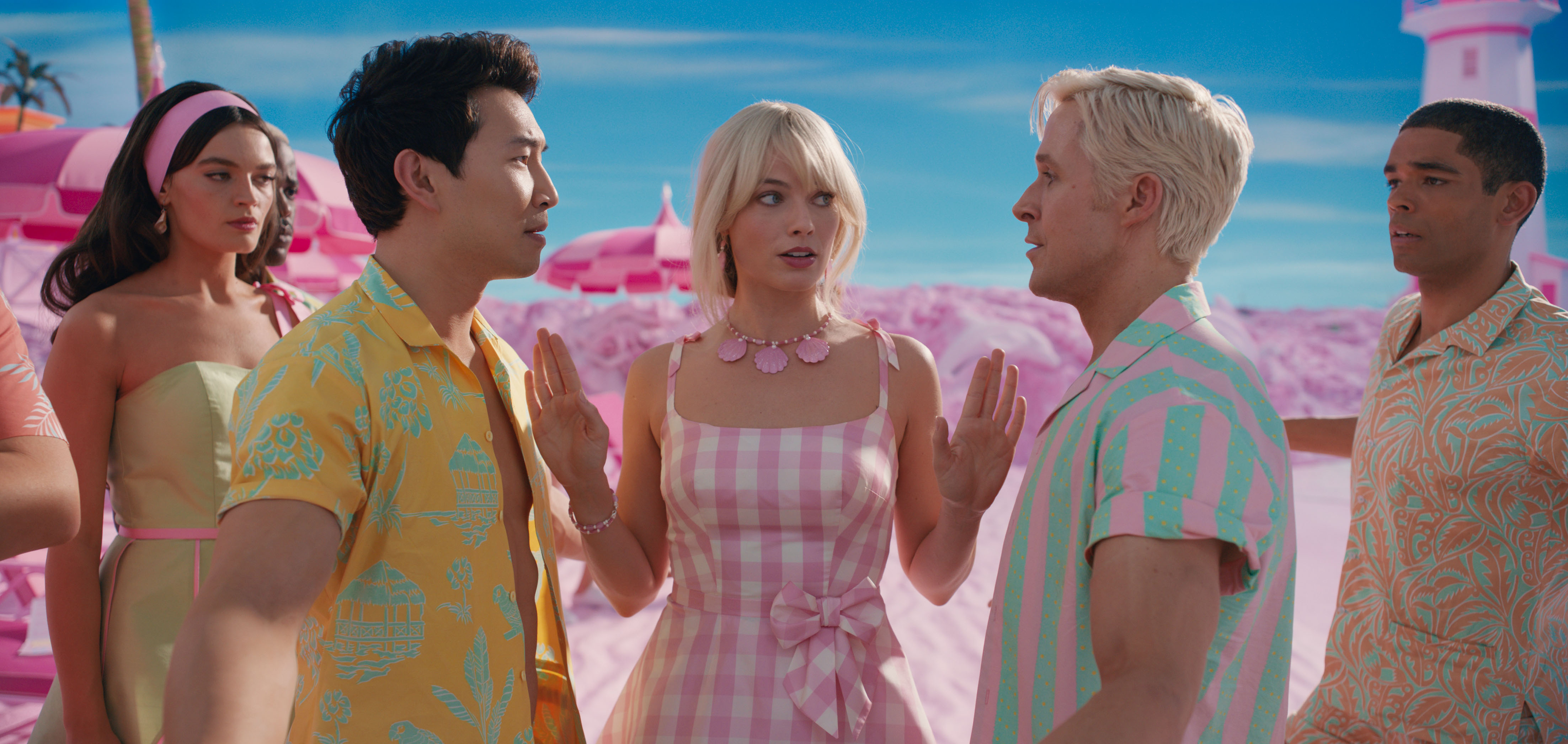
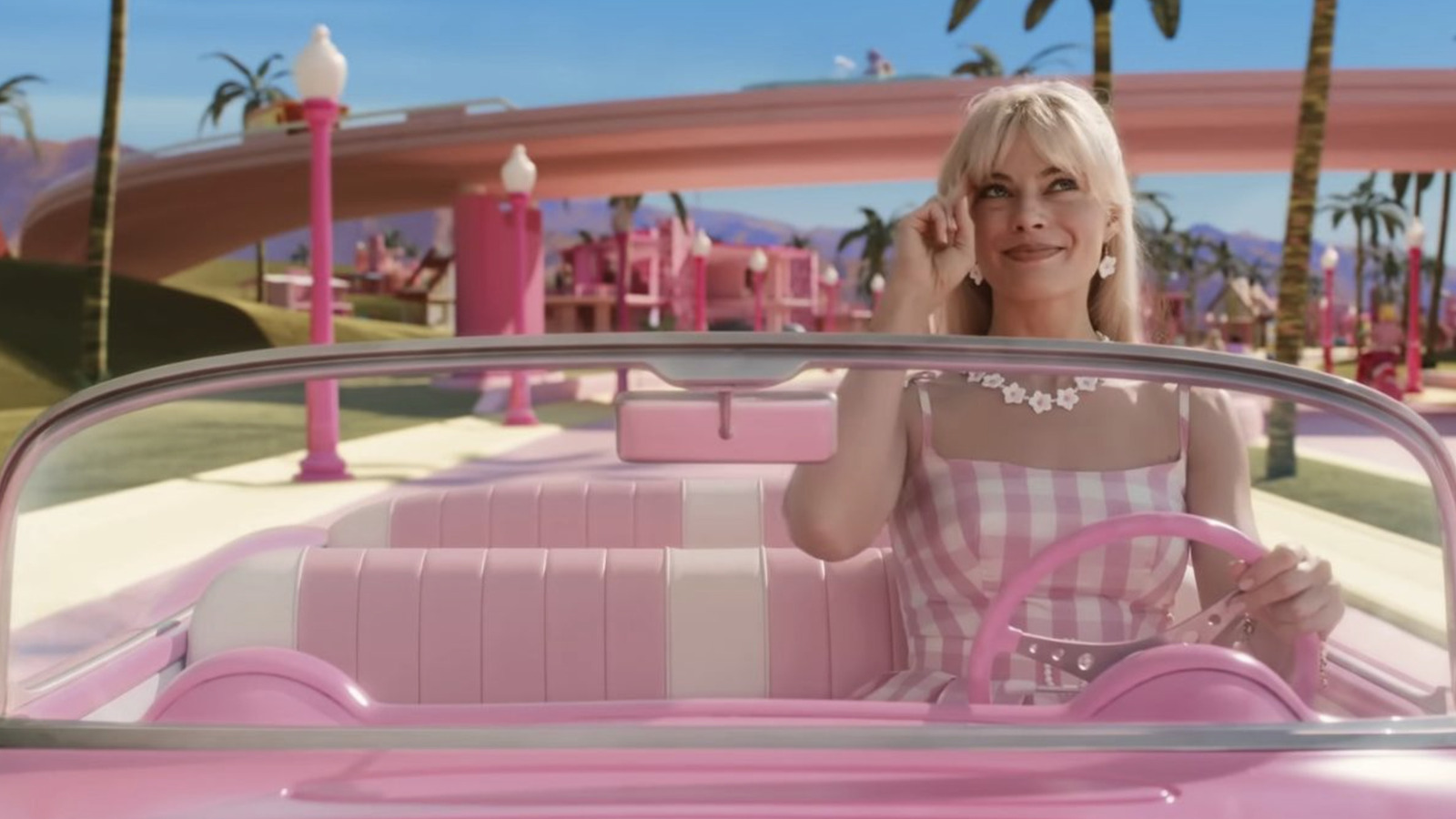
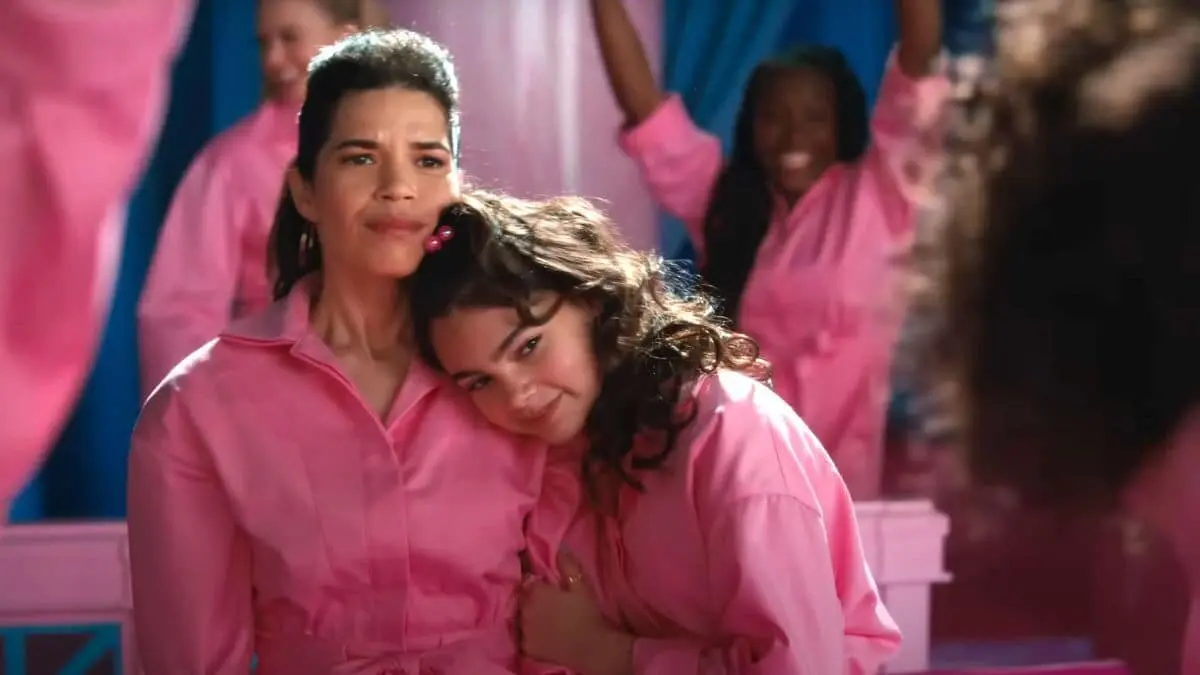
In near-perfect casting, Margot Robbie plays Stereotypical Barbie, the blond archetype who is just one of countless Barbies ruling the life-size toy world of Barbieland, while the second-class himbo Kens mainly focus on trying to impress their Barbies of choice. Robbie’s Barbie begins having “irrepressible thoughts of death” and cellulite, real-world problems shunned by Barbieland and forcing her to seek answers in, naturally, the real world, accompanied by her eager-to-please Ken (Ryan Gosling). There, she gets help from harried mother Gloria (America Ferrera) while Ken discovers the wonders of patriarchal society and plots to change Barbieland in ways beyond their ken (pun intended).
I should note that I watched this film, after much coaxing, with my dear Viewing Companion (VC), who was utterly against it at first. (I think Gosling’s stellar performance of “I’m Just Ken” at the Oscars might have convinced her to give it a try.) She has a very particular view of Barbie from when she was growing up, and the modern incarnation of the doll threatened to corrupt those happy memories. And while I found things to appreciate about the movie, she thought it was an altogether stupid waste of time with muddled messaging and overexaggerated acting. But at least she liked “I’m Just Ken”; that’s one thing even the haters seem to agree on.
The thing is that I don’t entirely disagree with my VC’s complaints. Barbie does have an annoyingly shallow view of the patriarchy and, despite giving voice to some downsides, seems to consider a similarly stratified matriarchy a better alternative, which may please girlbosses but is really no better. Yet the film also has fun playing with its various stereotypes and manages to mix in genuine laughs with the eyerolls, like Helen Mirren’s asides as the narrator or the awesome Pride and Prejudice joke. And while I didn’t find the cringy exaggerations of Barbieland particularly funny, I could see it appealing to other audiences’ sense of humor. I know everyone loves Gosling as Ken, but, despite his great song, I don’t really get his appeal, sorry.
While the pink production design and attention to brand detail and history deserve praise, I’m also mixed on the screenplay from Gerwig and Noah Baumbach. While it plays its excesses off for giggles, the plot is a mess, especially when Barbieland and the real world collide, not helped by the changing motivations of Will Ferrell as the CEO of Mattel (a caricature of corporatism that I’m surprised Mattel approved). Its treatment of what Barbie represents, how patriarchy shapes people, and the pros and cons of living in the real world all seems to play both sides of the argument. I loved her adaptation of Little Women, so, while some dismiss that duality as lazy writing, I have enough faith in Gerwig as a writer to believe it was all intentional to give the film more nuance than the simple narrative at its core would indicate. And the film’s climactic tearjerker scene that goes on a little too long at the end does a lot to deepen the film’s message into poignancy, despite being a drastic shift in tone.
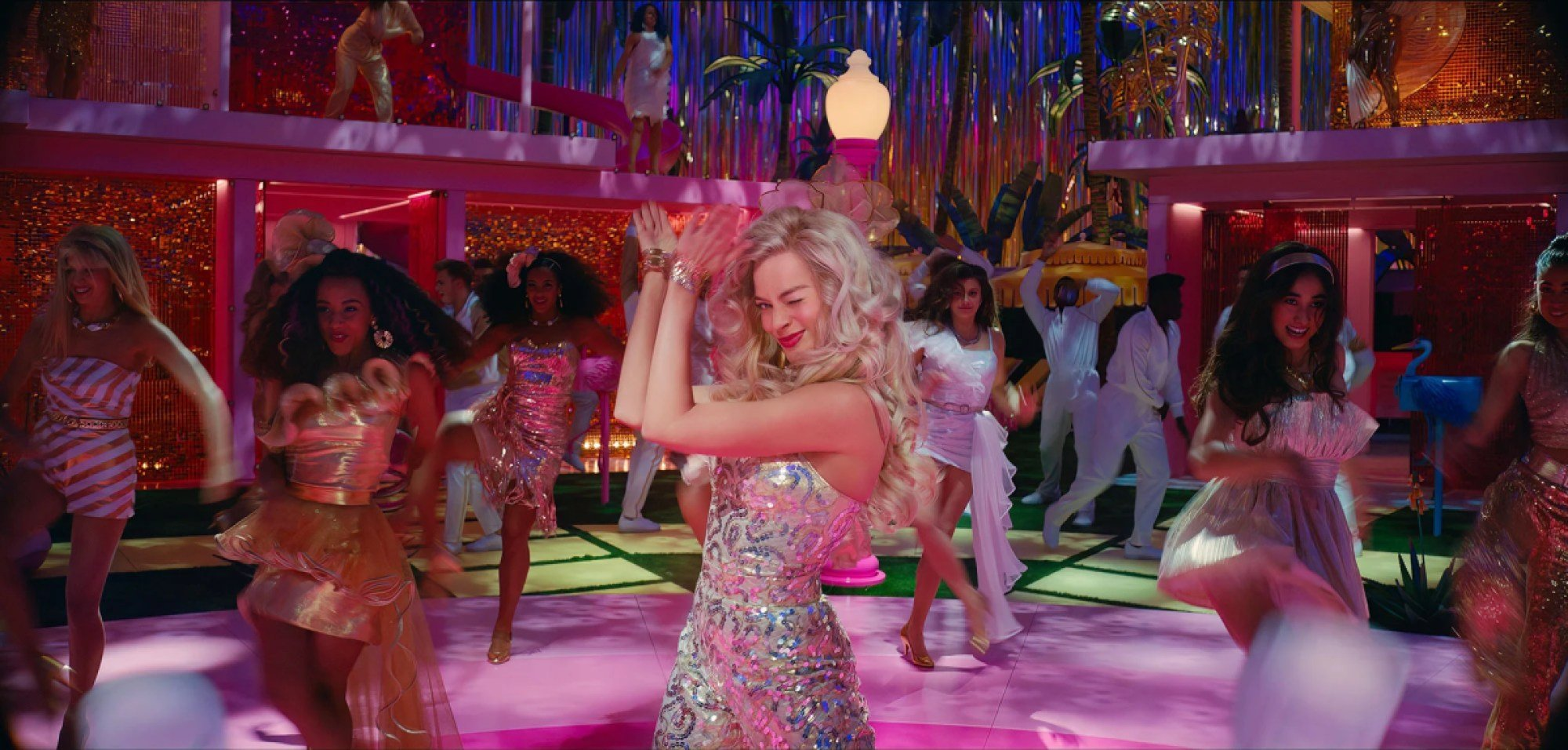
Ultimately, Barbie is not as egregious as its detractors insist nor as innovative as its fans proclaim. It actually recycles quite a bit from The Lego Movie, complete with Will Ferrell as the real-world authority figure. While many decried the Oscar snubs of Gerwig’s direction and Robbie’s leading role, I can’t say I disagree with the Academy here, considering the competition. I will forever wish that “I’m Just Ken” had won Best Original Song over Billie Eilish’s “What Was I Made For,” which is also good but just not as iconic as the anthem for Kens everywhere. Barbie likely won’t become a favorite in my house, but its mixture of dumb fun and existential questions certainly left its mark on the cultural zeitgeist.
Best line: (Ruth Handler, creator of Barbie, with an absolute gem of a line) “We mothers stand still so our daughters can look back and see how far they’ve come.”
Rank: Honorable Mention
© 2024 S.G. Liput
792 Followers and Counting
 Rhyme and Reason
Enjoyed your poem.
As one who has so far had no wish to see Barbie (and am too old to have enjoyed the dolls as a child) I also found your review very interesting, particularly as you’re not rabidly for or against. I might even watch it now (if it’s on a streaming service yet).
Aw, thank you! I did think Barbie was worth watching, if only for its outsized impact on pop culture. I believe it’s streaming on Max, but I got it from my local library.
Ah, never thought of that. Thanks!