Annihilation (2018)

Tags

, , , ,

(Today’s NaPoWriMo prompt was for a spooky and mysterious poem. Of course, I could have used either of the movies from the last two days, but this one works too, with its theme of unchecked change hopefully providing the chill factor I was going for.)

See the source image

The world is changing before my eyes,
And what a surprise
To notice mutations that God never tried
That eons would normally cover and hide.

That tree over there was not always a tree.
Nor was that creature that lurks in its shade.
Should I be afraid?
For I know what they are,
But what kind of people did they use to be?

Betrayed by their cells, too minute to resist,
They changed and exchanged what had made them exist.
What monsters are born from a change so extreme,
A mutable dream
Where men were not always the beasts that they seem?

Are questions of sanity signs that you’re sane?
Just being here mixes unease in my brain.
For I’m not immune;
My own skin’s a cocoon.
When it hatches, how much of myself will remain?
____________________

MPAA Rating: R (for some language and gruesome violence)

From the trailers, Annihilation looked like the kind of movie to follow in the footsteps of Arrival with its slow-burn, high-concept science fiction. Or maybe that’s just what I wished it was. It’s actually closer in spirit to 2001: A Space Odyssey, and while most critics considered that a point in Annihilation’s favor, it’s not for me.

See the source image

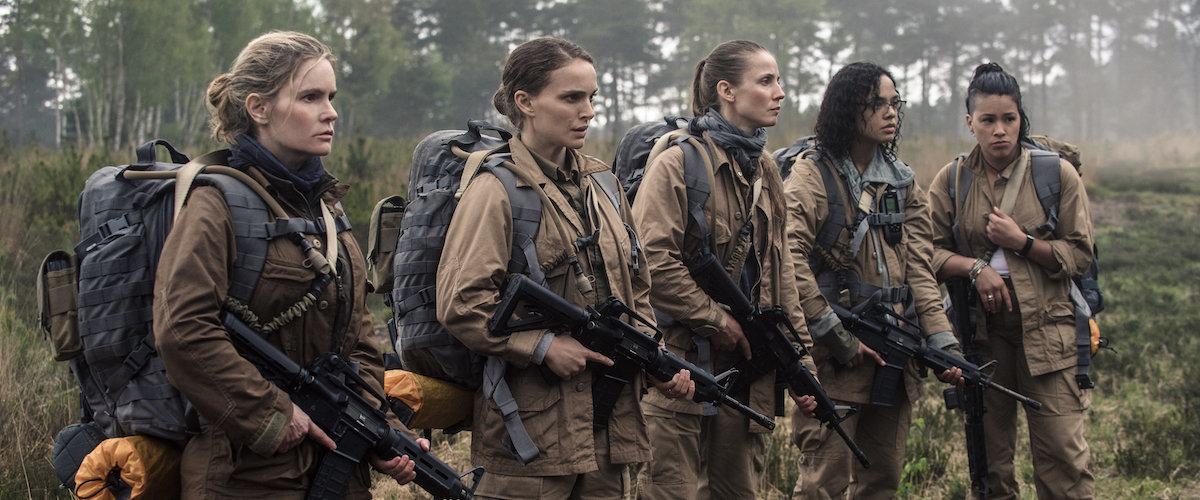
Natalie Portman plays a cellular biologist and ex-soldier named Lena, who recounts her story to a hazmat-suit-wearing Benedict Wong. After her soldier husband Kane (Oscar Isaac) disappears on a mission, he returns a year later changed and distant, and Lena soon learns where he has been: a forested region of Florida, where a shimmering, expanding wall has puzzled scientists and swallowed any team sent to investigate it. Along with a head psychologist (Jennifer Jason Leigh), a paramedic (Gina Rodriguez), a physicist (Tessa Thompson), and a geomorphologist (Tuva Novotny), Lena enters “the Shimmer” in an effort to unravel its mysteries.

I’ll admit writer-director Alex Garland’s Annihilation has the high acting and production standards that modern sci-fi deserves, and it’s a home run at least on a visual level. The set-up is superbly intriguing, and Lena’s journey into the Shimmer is buoyed by the allure of the unknown. Signals and light are unexplainably altered. Monsters and strange species lurk out of sight. The evidence they find of Kane’s mission challenges their sanity.

It’s Alien-level tension and uncertainty (or at least Prometheus-level), but all this mystery has to lead somewhere for it to be worthwhile, and Annihilation’s ending is just too ambiguous for its own good. That’s where the comparisons to 2001 ring true, with the largely wordless climax playing out like a fever dream of compelling but nebulous menace. In the end, though, its unanswered questions just left me puzzled by its enigmatic lack of resolution.

See the source image

It’s odd that this would be my gripe when I commended the ambiguity of The Endless just a couple days ago. I guess The Endless was open to interpretation in a way that suggested a complexity that was justifiably out of reach (and at least the main plot got some resolution), whereas Annihilation seemed more intentionally esoteric, like a puzzle where the writer was hiding pieces from you and chuckling at his own shrewdness. Maybe that makes no sense, and maybe others will enjoy the film’s mind-twisting, but Annihilation left me unsatisfied, just as my VC was left unsatisfied by the novel on which it was based (and by all the changes made by the filmmakers). I enjoyed the set-up, but not where it led. With its middling box office returns, they may or may not adapt the other books in the series, but either way, I’m not sure the resolution is worth caring about.

Best line: (Dr. Ventress) “Then, as a psychologist, I think you’re confusing suicide with self-destruction. Almost none of us commit suicide, and almost all of us self-destruct. In some way, in some part of our lives. We drink, or we smoke, we destabilize the good job… and a happy marriage. But these aren’t decisions, they’re… they’re impulses. In fact, you’re probably better equipped to explain this than I am.”
(Lena) “What does that mean?”
(Ventress) “You’re a biologist. Isn’t the self-destruction coded into us? Programmed into each cell?”


Rank: Dishonorable Mention


© 2019 S.G. Liput
625 Followers and Counting


Psycho 2 (1983)

Tags

,

(Today’s NaPoWriMo prompt was for a poem about loving something dull, so I gave it a bit of a deranged spin, courtesy of Norman Bates.)

See the source imageIt’s just a wig, a ratty thing,
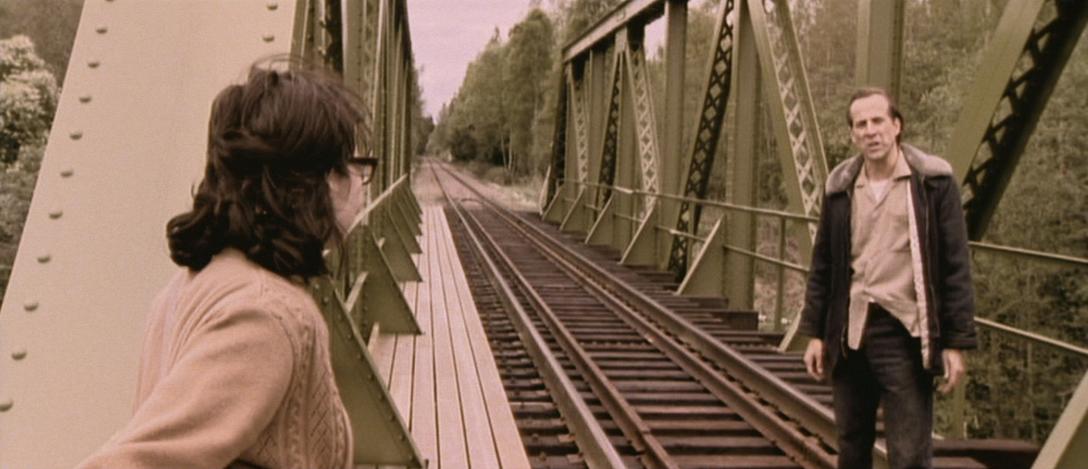
Gray from age and gray from dust,
And yet I cannot help but cling
To something I distrust.

It was my mother’s once, you know;
A hoary halo round her head,
And now no matter where I go,
I see it even though she’s dead.

To keep it still makes her feel close.
Morbid maybe? Yes, it’s true.
But I’m a quite obliging host,
And when I don it out of view…

Hello, Mother, how are you?
______________________________

MPAA rating: R (stronger language and violence than the original, plus brief nudity)

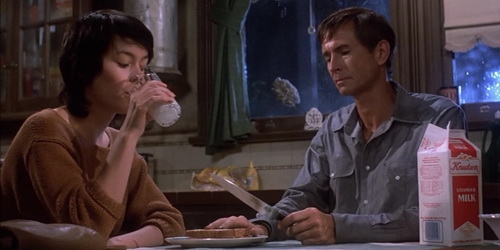
For those who may think that Hollywood’s resurrection of decades-old franchises for the sake of a sequel no one asked for was a recent trend, I will simply point to Psycho II, released 23 years after Hitchcock’s original (not to mention Psycho III three years later and Psycho IV four years after that). I think that the ’80s really kicked off the horror course of endless sequels, and Psycho was just one of many to get that treatment. While this long-delayed follow-up doesn’t compare with Hitchcock’s masterpiece, it’s a tight little slasher mystery in its own right.

Twenty-two years after the events of Psycho, Norman Bates (Anthony Perkins reprising the role) is supposedly rehabilitated and released from an insane asylum, much to the chagrin of Lila Loomis (Vera Drake), who still despises Bates for the murder of her sister Marion Crane. Getting a job at a nearby diner, Norman returns to his motel and the house from the first film, but after befriending a beautiful young coworker (Meg Tilly), he finds himself struggling with his sanity, especially as the body count mysteriously rises.

See the source image

Psycho II really tries to humanize Norman, making him sympathetic as he wonders whether he can trust his own mind, and Anthony Perkins manages it better than any actor taking his place could have. The mystery of Psycho has become too ingrained in pop culture for it to have much shock value anymore, but Psycho II keeps the characters and audience guessing what’s real and what’s psychosis. I’m rather disappointed in how one character is changed for the sake of the plot, right down to the gruesome way they’re dispatched. Otherwise, though, the mystery has decent twists and performances and even a little dark humor, making Psycho II better than I would expect from a film cashing in on Hitchcock’s legacy.

Best line: (Norman) “Well, I’ll tell you. When I was little, I had a fight with my mother, so I put some poison in her tea, you know. But I’m all right now.”
(Mary) “You sure?”
(Norman) “Sure! Otherwise, they wouldn’t give me a job at a diner, would they?”
(Mary) “I don’t know; it takes a nut to work there.”


Rank: Honorable Mention


© 2019 S.G. Liput
624 Followers and Counting


The Endless (2018)

Tags

, , ,

(Today’s NaPoWriMo prompt was for a poem of origin, so, inspired by the time loops in this film, I focused on how where we’re going might mirror where we’ve been.)

See the source image

Is darkness our friend?
They say we came from darkness.

We’ve grown up searching for the light
From friends both fickle and contrite,
From dogs that lick and dogs that bite,
And lies that distance and unite.

It feels as though our life’s a loop,
A track so many have run before,
From more to less and less to more,
And ere our ship returns to shore,
Our time is short, but we explore.

The light’s the loop,
The dark’s the end,
They say we’re headed for darkness.
Is darkness still our friend?
____________________

MPAA rating:  Not Rated (R for the language and some violence, though there’s much worse out there)

Not being a huge fan of horror, I’ll admit I’m not very familiar with the works of H.P. Lovecraft, a name I’ve noticed becoming more and more popular lately. What constitutes Lovecraftian horror is new to me, but from what I understand, it deals with terrifying cosmic powers beyond the scope of human understanding, or basically fear of the unknowable. If that’s right, The Endless might be the best example I’ve seen, a fascinating and slow-burning mystery with an undercurrent of paranoia and weirdness.

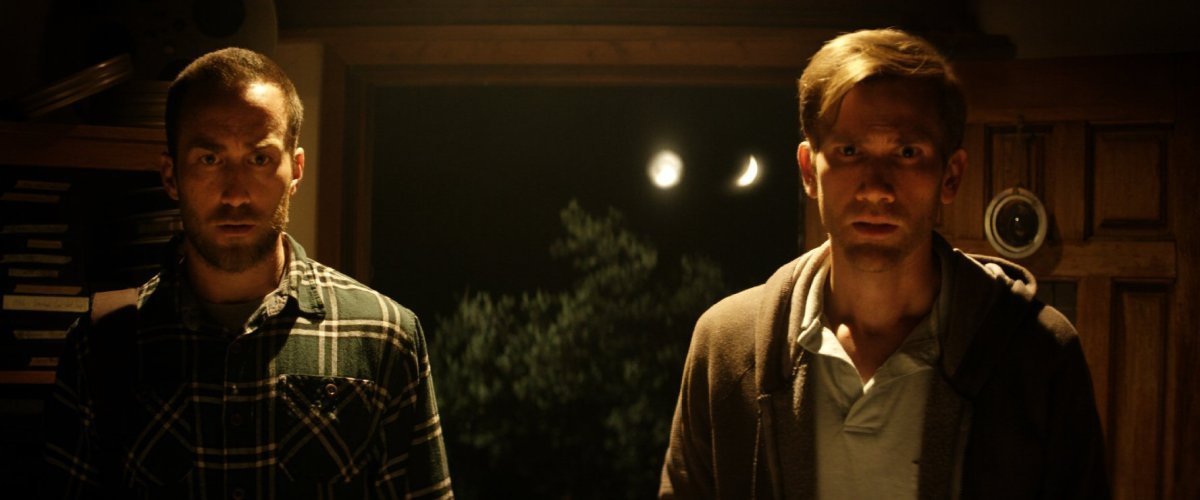
Two brothers Justin and Aaron (played by Justin Benson and Aaron Moorhead, who also directed and split work on writing, editing, and cinematography) are struggling with normal life some years after escaping from a so-called “UFO death cult” out in the desert. Aaron remembers their time there as one of stability and plenty and wishes to return, and, though Justin is dead-set against it, he agrees to briefly visit their former home after a mysterious video arrives. Strangely, very little seems to have changed, but the longer the brothers stay, the more uncanny events seem to happen, portending a great danger that might be inescapable.

See the source image

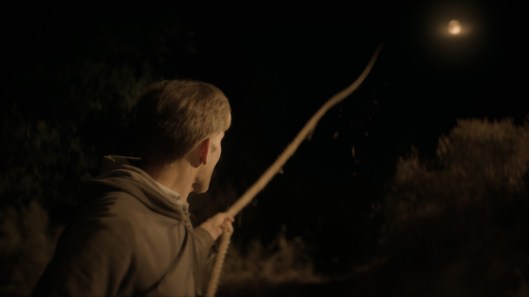
I won’t pretend to claim that I completely understood the film’s plot, but The Endless is well-acted and has intrigue to spare, with mysteries and fear piling on top of each other and most of the questions left largely unanswered by the end. Yet it’s very much a case of what you don’t see being scarier than what you do; there’s not really any nightmarish imagery, more foreboding and unease. A prime example is when the brothers are invited to pull on a rope as one of the community’s confidence exercises. The rope stretches off into the darkness as each person plays tug-of-war with something, with the chill factor coming from the lack of knowing what that something is.

As the film goes on, it enters a wilder side of science fiction, with time loops and fractured dimensions that challenge the mind and don’t provide easy answers, if any, but through it all, the brotherly bond between Justin and Aaron proves to be a strong human element to ground the craziness. I’m curious now to check out one of Benson and Moorhead’s previous films called Resolution, which apparently expands on one of the subplots from this movie, or vice versa. (Fans of theirs were no doubt happy to spot the connection.)

See the source image

Like Chronesthesia, The Endless is an example of multitasking filmmakers making the most of a limited budget and delivering a surprisingly solid product; the special effects are especially well-done for an independent film. It’s also one of those movies worth rewatching and discussing with others, if only to understand it better, though perhaps that lack of full comprehension is both the point and the appeal.

Best line: (an anonymous quote displayed at the beginning) “Friends tell each other how they feel with relative frequency. Siblings wait for a more convenient time, like their deathbeds.”


Rank: List Runner-Up


© 2019 S.G. Liput
622 Followers and Counting


Leave No Trace (2018)

Tags

(Today’s NaPoWriMo prompt was to incorporate some kind of regional weather term. Because of its potential origins in the Pacific Northwest, where this movie is set, I took inspiration from the word sunbreak, which Wikipedia defines as “a passage of sunlight in the clouds during dark, rainy winters (typical west of the Cascade Mountains.”)

See the source image

The forest floor was waterlogged
As constant raindrops pounded it,
And constant clouds obscured the sky
As verdant vines surrounded it.

The greens were muted, shadow-strewn,
Until a sunbreak was extended.
Viridescence quelled the gloom
Long after that sky-tear had mended.
__________________

MPAA rating: PG (very little objectionable)

Leave No Trace is like the antithesis of all the loud and flashy Hollywood blockbusters these days. It’s slow, quiet, melancholy, and light on dialogue. Despite boasting two excellent performances from Ben Foster and Thomasin McKenzie, it wasn’t visible enough to get any award love either, but it’s a slow-burn drama that’s still earned much love in cinephile circles.

See the source image

Foster plays Will, a war veteran suffering from PTSD, whose anti-social anxieties have driven him into the lush forests of an Oregon park. There he lives off the land and minimal resources (a tent, a propane stove) and hides himself and his thirteen-year-old daughter Tom (McKenzie) from the obtrusive outside world. Though more curious than her dad, Tom is a loving daughter committed to doing anything that keeps her and her dad together. Soon, though, the world intrudes on their wooded enclave and, when presented with a “normal” life, Tom’s contentment and bond with her father are tested.

Leave No Trace has no lack of realism, but its human interest, while present and touching even, is kept at arm’s length with little to no backstory on what brought Will to this point. Tom’s relationship with her father is sweet in its devotion and becomes further poignant as they both eventually realize the difference between her normal needs and wants and those of her father. It’s refreshing that she never resents her father and only raises her voice once, a sign of their mutual trust and rare familial bond even when troubled by self-doubt.

See the source image

Deliberate action and pensive silence are potently used, especially during some later scenes, and the acting is awards caliber, but this is definitely a critic’s movie. Professional reviewers will continue to adore it (100% on Rotten Tomatoes), while normal viewers will either appreciate its honest subtlety or be bored to tears. I suppose I’m somewhere in between.

Best line: (Tom, to her father) “The same thing that’s wrong with you isn’t wrong with me.”


Rank: Honorable Mention


© 2019 S.G. Liput
621 Followers and Counting


2019 Blindspot Pick #3: Dancer in the Dark (2000)

Tags

,

(Today’s NaPoWriMo prompt was for a list poem, so, based on this film, I wrote a list of things that make my heart ache. Try singing it to the tune of “My Favorite Things,” which was used in the movie.)

See the source image

Signs that the world is a heinous taskmaster,
Questions with answers unfair to the asker,
Innocence tainted by lack of concern:
These are the lessons it pains me to learn.

Optimists dashed and brought low for their dreaming,
Bitterness tinged by a sweetness redeeming,
Love too naïve to be wary of hate,
Promises broken or kept far too late,

When the dog dies,
When the tale ends,
When I need to grieve,
My broken heart summons the tears as it mends,
For they never truly leave.
_____________________

MPAA rating: R (more for intensity, what’s shown is closer to PG-13)

Due to his reputation for controversy, I’ve never been eager to watch the films of Lars von Trier. Yet I’ve been long curious about Dancer in the Dark, and my Blindspot series seemed like a prime chance to find out how a musical could also be considered among the most depressing movies of all time. I have a finicky regard for unapologetic downers. I love Grave of the Fireflies and The Elephant Man dearly, yet I can’t stand something like Seize the Day or The Hours. It depends on the film and the person whether it has the desired effect, and Dancer in the Dark hit me harder than I was expecting.

«dancer in the dark» HD Wallpapers

I only knew of Icelandic singer Bjork for her strange style of singing, but she proves to be perfect for the role of a Czech immigrant mother struggling to provide her son with a better life. Having settled in Washington State in the 1960s, Selma Jezkova works hard in a factory with her friend Kathy (Catherine Deneuve), rents a trailer from a kind couple (David Morse, Cara Seymour), practices for a small stage production of The Sound of Music, and is slowly going blind. She’s been saving up for an operation so that her son need not bear the same affliction, which begins to impede her daily life.

Throughout the first half, the film gives every reason to love these characters, everyone sympathetic and helpful to Selma, including a would-be suitor she rebuffs (Peter Stormare). I could relate to Selma’s love of musicals and admired her commitment to her son, even if her stubbornness got in the way sometimes. Then, by believable but heartbreaking measures, one character’s selfishness and self-loathing become destructive and ruin everything that Selma has built.

Dancer in the Dark - Is Dancer in the Dark on Netflix - FlixList

Dancer in the Dark is not the kind of film I would expect to like, choppily edited and shot with a grainy, hand-held camera in a style that is apparently part of a semi-genre/movement called Dogme 95, which von Trier helped to establish. It’s an odd mixture when this style focused on realism suddenly shifts into the magical realism of Selma’s daydreams, musical segments where the sounds she hears become rhythmic as the colors brighten and friends and bystanders break into choreography.

It’s not shot like a typical musical, nor are the songs instantly catchy like something from Broadway. Bjork’s singing is even distracting at times, making the lyrics hard to understand. Yet it’s more about the feelings the songs create, and they strike deep. One revels in Selma’s love of musicals, even as it betrays her. After a horrific event, one song plays out the way Selma surely wishes it could go under better circumstances. Again, it’s a strange juxtaposition, but it works, in a way I can only compare to how humor was mixed with tragedy in Life Is Beautiful.

See the source image

The leadup to the tragic climax is probably strung out too much, but Dancer in the Dark left me haunted as few films do, and while some critics have dismissed it as shameless melodrama, it earns its heartbreak in my book. While it’s not a perfect comparison, since Selma actually commits a crime, the way the world turns on her brought to my mind the trial and suffering of Christ, a parallel strengthened by Selma’s line about her son’s operation, that it would be known “that he was paid for.”

With strong supporting work from Deneuve, Morse, and Siobhan Fallon (even a cameo from Joel Grey), Dancer in the Dark proved to be an acting powerhouse thanks to Bjork herself, who staggeringly was passed over for an Oscar nomination despite winning Best Actress at Cannes. She and the film itself may be an acquired taste and a bitter one at that, but their power is undeniable.

Best line:  (Bill Houston) “I love the movies. I just love the musicals.”
(Selma) “But isn’t it annoying when they do the last song in the films?”
(Bill) “Why?”
(Selma) “Because you just know when it goes really big… and the camera goes like out of the roof… and you just know it’s going to end. I hate that. I would leave just after the next to last song… and the film would just go on forever.”

Rank: List-Worthy

© 2019 S.G. Liput
621 Followers and Counting

The Commuter (2018)

Tags

, ,

(Today’s NaPoWriMo prompt was to incorporate some kind of business jargon, but my limited time also limited my thought process on this one, so I skipped the prompt. Just a limerick today, with a bit of dark wordplay.)

See the source image

There once was a frazzled commuter
Who spent his whole day on computer.
They say that he snapped
After feeling too trapped
And became an acclaimed troubleshooter.
__________________

MPAA rating: PG-13

Liam Neeson just loves these late-in-life thrillers where a 65-year-old can still kick butt. I haven’t kept up with them all so I can’t rightly tell how The Commuter compares, but I for one enjoyed it a lot.

Neeson plays Michael MacCauley, an insurance agent and ex-cop, who on the day he gets laid off meets a mysterious woman (Vera Farmiga) who offers him $100,000 for him to find someone called “Prynne” on the train who doesn’t belong. It’s a vague task, and as Michael gets pulled in further, he soon finds it to be a life-and-death struggle that’s not about to let him go easily.

See the source image

Despite Neeson’s age, he fits the role like a glove, and the early scenes detailing his daily routine and commute establish him as a likable everyman. Once the action starts, he keeps up admirably, especially during a stand-out one-take fight scene with excellent camera work. The twists and turns offer a few surprises as well, even after what would normally be the final set piece for a film set on a train.

Also starring Elizabeth McGovern, Sam Neill, and Patrick Wilson (shame he had no scenes with fellow Conjuring star Farmiga), The Commuter probably isn’t the kind of movie that is likely to be remembered years from now.  But it’s a fast-paced mystery thriller (albeit with some convolutions and unanswered questions) that proves how watchable Neeson can be.


Rank: List Runner-Up


© 2019 S.G. Liput
621 Followers and Counting


Florence Foster Jenkins (2016)

Tags

, ,

(Today’s NaPoWriMo prompt was a poem about joy and gifts, so I thought of the selflessness offered to the title character of this biopic.)

See the source image


A dream is a gift on the highest of shelves,
And no one is tall enough for it.
We wonder what treasures are hidden within,
And watch other people reach theirs with chagrin.
We reach and we climb
And we strain every time;
We yearn and beseech
While it’s just out of reach.
This struggle, we hate and adore it.

But after the struggle has worn us bone thin
And made us give up on the treasures within,
For someone still taller to pluck our dream down,
Impelled by our dreaming and not for renown,
And offer it to us,
The dream that so drew us…
It questions the thought
That the world is all rot,
For kindness still lives
In the gifts that it gives.
_____________________

MPAA rating: PG-13

I didn’t realize that I’d be highlighting Meryl Streep’s lesser performances this week (Into the Woods was just a couple days ago), but it just worked out that way. I’ve long held Florence Foster Jenkins in semi-contempt ever since Streep got an Oscar nomination while Amy Adams in Arrival was snubbed. Yet I was curious to see whether her portrayal of the aspiring untalented opera singer was really undeserving or not.

See the source image

While I believe without a doubt that Streep’s Academy clout clinched the nomination, her role as Jenkins does have its strong moments, particularly when it shifts from milking her bad singing for comedy to mixing in the drama of her failing health and self-confidence. I suppose knowing from Into the Woods and Mamma Mia! that Streep can sing adds to the role’s difficulty; it takes skill to sing poorly on purpose. I can see Streep’s performance being worthy of an Oscar nom in a weak year, but I’ll take it to my grave that Amy Adams deserved it more in 2016.

Nearly overshadowing Streep is Hugh Grant as her husband/manager St. Clair Bayfield, who repeatedly swings the audience’s opinion of him; at first, he seems a faithful husband, then a cad when we realize he has a mistress, then somewhat sympathetic when the circumstances are clarified, then back to amazingly sweet and selfless husband by the end. Likewise, Simon Helberg as Cosmé McMoon, Jenkins’ self-conscious pianist, serves well as a stand-in for the audience, shocked by Jenkins’ naivete about her lack of talent but hesitantly supportive of her efforts.

See the source image

Florence Foster Jenkins is a well-written biopic I doubt anyone was clamoring for, but it’s better than its title character’s voice might indicate. While it extracts inspiration from Jenkins and her eagerness to share her passion and fulfill her dream whether the listening world likes it or not, it didn’t quite convince me whether that was a good thing or not. When someone aspires to be legitimately famous, would they really be satisfied with becoming infamous instead?

Best line: (Carlo Edwards, a ‘friend’) “Obviously I’ll do my utmost to attend the concert, but I’ll be away in Florida at some point.”   (St. Clair) “Oh, right. When?”   (Edwards) “Let me know when you’ve fixed a date.”


Rank: List Runner-Up


© 2019 S.G. Liput
620 Followers and Counting


Snowpiercer (2013)

Tags

, , ,

(Today’s NaPoWriMo prompt was for a poem about the possible, so I tackled the improbability/possibility of sci-fi dystopias.)

See the source image

What would you call an improbable threat
For the future that no one has witnessed as yet?
Dystopian visions are dozens per dime,
Propped up by the volatile nature of time.

Who knows if we might be supplanted by apes,
Or drive over ruined, deserted landscapes?
Who knows if we might be beset by undead,
Or banned from free thought by a Big Brother head?
Perhaps we might battle an alien foe
That strikes from above or attacks from below.
The sun may desert us or scorch us to ash,
Or robots may kill us or clean up our trash,
Or humans may live in a virtual setting
That no one recalls since it’s built on forgetting.
Or maybe, just maybe, mankind may well learn
From all its mistakes that so often return
And set up a world of the peaceful and wise,
Not built on the backs of control and dark lies.

But with all of the ifs that end nightmarishly,
I think that’s unlikely, but hey, it might be.
_____________________

MPAA rating: R

It’s hard to know how I feel about Snowpiercer. On the one hand, I can appreciate the ambition that went into this epic dystopian vision, and on the other, I’m confounded by the bizarrely unrealistic concept that remains straight-faced throughout all its weirdness and violence. It’s a film I’m glad to have seen once, but I’m not sure I want to see it again.

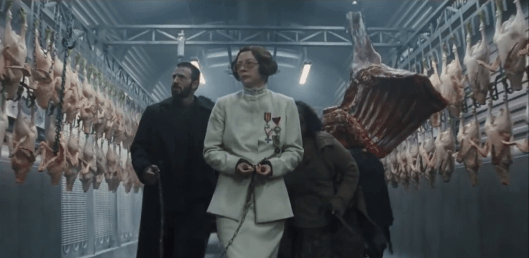
After a half-baked attempt to stop global warming sends the planet into a deep freeze, the only remaining humans are those aboard the Snowpiercer, a high-speed train looping endlessly across the globe. The wealthy live in luxury in the front of the train, while those in the back scrape by in squalor and authoritarian suppression, personified by the loathsome Minister Mason (Tilda Swinton with false teeth). After seventeen years, the have-nots make their final push for change as their leader Curtis (Chris Evans) aims to take the engine.

See the source image

The biggest problem with Snowpiercer is buying into its unlikely dystopia without being distracted by just how unlikely it is. So much science fiction is dedicated to conjuring future worlds where vices are taken to extremes or improbable outcomes challenge our perceptions, so in some ways, Snowpiercer is in good company. But then again (and my views may be tainted by a semi-famous and extremely negative review I read a while back), there is such a thing as too many plot holes. Why is one Korean girl psychic? How is it that the wealthy of the front section have perfectly maintained amenities and clean clothes with no visible manufacturing or service areas? It’s a train after all; there’s only so much room in the cars, all of which Curtis passes through to get to the front, often with random themes, like an aquarium or a rave. Surely this train isn’t as self-sustainable as it appears with no outside resources. Considering the body count and how pyrrhic the battle becomes, how can the ending be viewed as anything but a total downer waving a shred of false hope?

It’s a lot to overlook, yet, if you can, there’s much to appreciate as well. The set design and limited CGI effects (mainly any exterior shots) have a convincing world-building flair, and the fight scenes, while unnecessarily bloody, are tense and shocking, with a strange preoccupation with limb amputations. The film does excel as an action movie and has moments of pointed social commentary about the breakdown of society, though its almost cartoonish class struggle themes were done far better in The Hunger Games series.

See the source image

Snowpiercer seems to be divisive, and all in all, I can’t completely agree with either end of the spectrum. It’s not a total train wreck (pun intended) as some faultfinders have derided it, but neither does it seem worthy of its effusive critical praise and 95% on Rotten Tomatoes. I’m somewhere in the middle, dubiously positive you might say. If you can manage to take its grim craziness in stride, Snowpiercer may be the dystopia for you.

Best line: (Wilford, the creator of the train) “Curtis, everyone has their preordained position, and everyone is in their place except you.”  (Curtis) “That’s what people in the best place say to the people in the worst place.”


Rank: Honorable Mention


© 2019 S.G. Liput
620 Followers and Counting


Into the Woods (2014)

Tags

, , ,

(Today’s NaPoWriMo prompt was for a villanelle, a special form with alternating repeated lines as below, and the prompt suggested incorporating someone else’s words. The repeated lines I used are drawn from the musical Into the Woods, along with part of the theme.)

See the source image

Careful the tale you tell,
For tales are not words but adventures and fates;
All stories cast a spell.

They conjure the best and worst places to dwell,
And leave you in clouds or burdened by weights.
Careful the tale you tell.

Emotions on strings as they rise and repel
Are pulled by the magic that fiction creates.
All stories cast a spell.

No louche Casanova, no wish from a well
Has broken more hearts or honored more dates.
Careful the tale you tell.

Each one is a world and a ceiling-less cell,
Where soon-to-be-friends and a new home awaits.
All stories cast a spell.

When fantasy finally bids you farewell,
How do you feel as the world deviates?
Careful the tale you tell;
All stories cast a spell.
______________________

MPAA rating:  PG

Those familiar with this blog might already know that I’m a huge fan of musicals. While others roll their eyes or cringe at all-sung films like Les Miserables, I love it. There’s something about the combination of song, lyric, dance, and story that I find particularly appealing and entertaining. However, not all musicals are equal, and all four (sometimes three minus dance) of those ingredients have to be on point for the magic to work. Into the Woods comes so close to nailing them all, yet by the end, I could only wonder what went wrong.

See the source image

Based on Stephen Sondheim’s popular musical, which is just as old as The Phantom of the Opera, Into the Woods weaves multiple fairy tale stories together: Little Red Riding Hood, Jack and the Beanstalk, Cinderella (Anna Kendrick), Rapunzel, and an original connecting tale of a Baker (James Corden) and his Wife (Emily Blunt) seeking out spell ingredients for a desperate Witch (Meryl Streep). The way the stories blend together and overlap, playing out in familiar ways with unexpected connections, is a joy to watch, especially with hammy but committed performances from Johnny Depp, Chris Pine, and Streep (who shockingly got an Oscar nomination; she’s good, but this is probably her least deserving role).

It’s a highly enjoyable movie, or rather two-thirds of a movie, because at a certain point, it’s just…ruined. At a happy moment that could have ended the film well, the story suddenly takes a left turn into disaster and tragedy and shattered reputations. It’s a dark move, which is apparently even darker in the stage version, and it saps most of the enjoyment from the film as a whole.

See the source image

Even if none of the songs are instant classics likely to live long in the memory, the music is the saving grace of Into the Woods. My VC thought the tunes were a bit too repetitious, lacking the complexity or vocal range of Phantom or Les Mis, but, as a poet, I especially admired the clever lyrics and rhymes. It has outstanding production values and strong performances too, but in its effort to offer a darkly unsatisfying take on beloved stories, this fractured fairy tale proves to be a failed musical in my book. My VC and I agree that we would recommend the first two thirds; just bail when the tale goes to pot.

Best line: (the Baker’s Wife) “Oh, if life were made of moments, even now and then a bad one – But if life were only moments, then you’d never know you had one.”


Rank:  Dishonorable Mention


© 2019 S.G. Liput
619 Followers and Counting


Beautiful Boy (2018)

Tags

, ,

See the source image

(Today’s NaPoWriMo prompt was for a sad poem using simple, straightforward language, and this story of a father mourning his son’s choices seemed like a perfect fit.)

When I first held you in my hands,
A life so small and yet so dear,
I dreamt of all your hopes and plans
That lay so far away from here,
In years ahead, when you perhaps
Did not need me as you did then.
Too soon did all those years elapse,
Too soon you joined the world of men.

You’ve gone your own way, that is clear,
On paths I’d never dreamed before,
And now I wait, with growing fear,
For news that you are here no more.
My son, I love you and I will,
Although you’ve left my heart so sore.
Afar, I stand and love you still
And wish I held you close once more.
_________________________

MPAA rating:  R (for much language and drug content)

Do you remember the final, heart-breaking scene of Philadelphia, where the film gives us a stark comparison between the disease-ridden character that just died and his innocent child self, subtly asking how someone once so pure could have been brought so low? That’s essentially what Beautiful Boy is, just stretched out to feature-length, yet still quite affecting, thanks to Oscar-worthy turns from Steve Carell and Timothée Chalamet as a father and son plagued by drug addiction.

See the source image

Carell plays real-life journalist and father David Sheff, who in the early 2000s had to endure the pain of watching his son Nic (Chalamet) battle a meth addiction. The story is rife with flashbacks, many of which contrast Nic’s current struggle with his free-spirited childhood, as I said. Some also offer hints of what led him down the dark road to addiction, as when he defends his early gateway drugs in the name of youthful experimentation, just as his father did back in the day. Yet the phase that David grew out of, Nic succumbs to, leading to an emotional rollercoaster as he goes in and out of rehab with David desperate to help him any way he can.

Since it’s what I call a Triple A movie (one that’s All About the Acting), I’m honestly shocked that Beautiful Boy was entirely snubbed by the Oscars, though it did get a couple nominations at the Golden Globes, including one for Chalamet. The repetitive plot ends up feeling longer than it really is, perhaps because it’s emotionally draining as well, but there’s genuine heartfelt talent here, not to mention the extra-timely subject matter, which brings home the personal cost of America’s drug epidemic in stark, sympathetic detail. I’ve personally never understood the attraction to drugs, but this movie brings into focus how destructive they are and how unpredictable their effects can be, with one man’s single experiment becoming another man’s road to addiction.

See the source image

I can see why it might not win Best Picture, with its excessive flashbacks and music (occasionally intrusive) stressing how dramatic it is, but the snub is hard to believe, especially compared to 2016’s Manchester By the Sea, another Amazon Studios film that won two Oscars and was dull and inferior next to this film. Chalamet and Carell give exceptional performances, and I highly suspect they’ll both end up with Oscars one of these day, or at least they should.

Best line: (David, to Nic as a child) “Do you know how much I love you? If you could take all the words in the language, it still wouldn’t describe how much I love you. And if you could gather all those words together, it still wouldn’t describe what I feel for you. What I feel for you is everything. I love you more than everything.”


Ranking: List Runner-Up


© 2019 S.G. Liput
618 Followers and Counting